

On this page
- The purpose of equipment financing for businesses
- What's the difference between equipment loans and leasing?
- Let's discuss some typical equipment commonly financed
- Types of business equipment financing
- What are the benefits of business equipment financing?
- What are the requirements for a business equipment financing application?
- Key takeaways
Key Points About What Equipment Financing is
- Equipment financing is a business loan or lease that helps companies buy tools, machinery, vehicles, or technology without paying the full cost upfront.
- The equipment itself usually acts as collateral, which helps lenders approve the loan and reduce risk.
- Businesses repay the cost over time with interest, often through fixed monthly payments that match the equipment’s useful life.
- It helps preserve cash flow so businesses can invest in operations while still getting the equipment they need to grow.
Top Equipment Financing in Canada




Imagine a small manufacturing business in Ontario that wants to purchase a new CNC machine for $250,000.
It’s a powerful piece of equipment that could drastically improve their product design, quality, and production speed, but paying for it up front would wipe out their cash reserves and slow down other growth initiatives.
Rather than tapping every line of credit, they decide to leverage equipment financing for businesses, enabling them to invest in the machinery, while paying for it over time.
That scenario is far from hypothetical, especially in Canada. According to the Biannual Survey of Suppliers of Business Financing, lending to Canadian businesses remains robust, and in the first half of 2024, new business credit disbursements skyrocketed to $199.7 billion!
For many small and medium-sized enterprises (SMEs), especially those in manufacturing, construction, and transportation, you’ll find that commercial equipment loans, machinery financing, and equipment leasing for businesses are not just optional; they are invaluable tools for growth.
Let’s discuss what equipment financing entails, why it’s so important for Canadian companies, and how to make wise decisions when choosing between loans, leases, or other financing structures.
The purpose of equipment financing for businesses
At its simplest, equipment financing refers to the various financial arrangements that help a business acquire the equipment it needs without paying the full cost up front.
This can include taking out a commercial equipment loan, leasing the equipment, or using other structured finance deals. The goal is to spread the cost and risk, so businesses don’t have to drain their cash reserves just to renew or expand their tools and assets.
In many cases, the equipment itself acts as collateral. Because lenders can repossess and sell the asset if payments aren’t made, they are more willing to work with businesses that may not have any other substantial collateral. This makes equipment financing especially attractive for growing SMEs.
What’s the difference between equipment loans and leasing?
Two of the most common approaches to equipment financing are equipment loans and equipment leasing, and they serve different business needs. With a loan, a business borrows money to buy the equipment outright.
Once paid off, you own the asset. You make payments that cover both principal and interest.
As for leases, you’re essentially renting the equipment. Depending on the arrangement, at the end of the lease you might return the asset, buy it for a pre-set price, or upgrade.
Loans are ideal when you want ownership and can plan for long-term use. Leases, on the other hand, provide flexibility, lower upfront costs, and, depending on the lease type, sometimes an “off-balance-sheet” treatment.
Let’s discuss some typical equipment commonly financed
Equipment financing spans a wide range of assets. Some of the most frequently funded equipment includes:
- Heavy-duty machinery and industrial equipment like excavators, production line machinery, and sophisticated robots.
- Vehicles and fleet assets, e.g., delivery trucks, vans, specialty commercial vehicles, etc
- Office technology and IT, e.g., servers, laptops, and telecom systems.
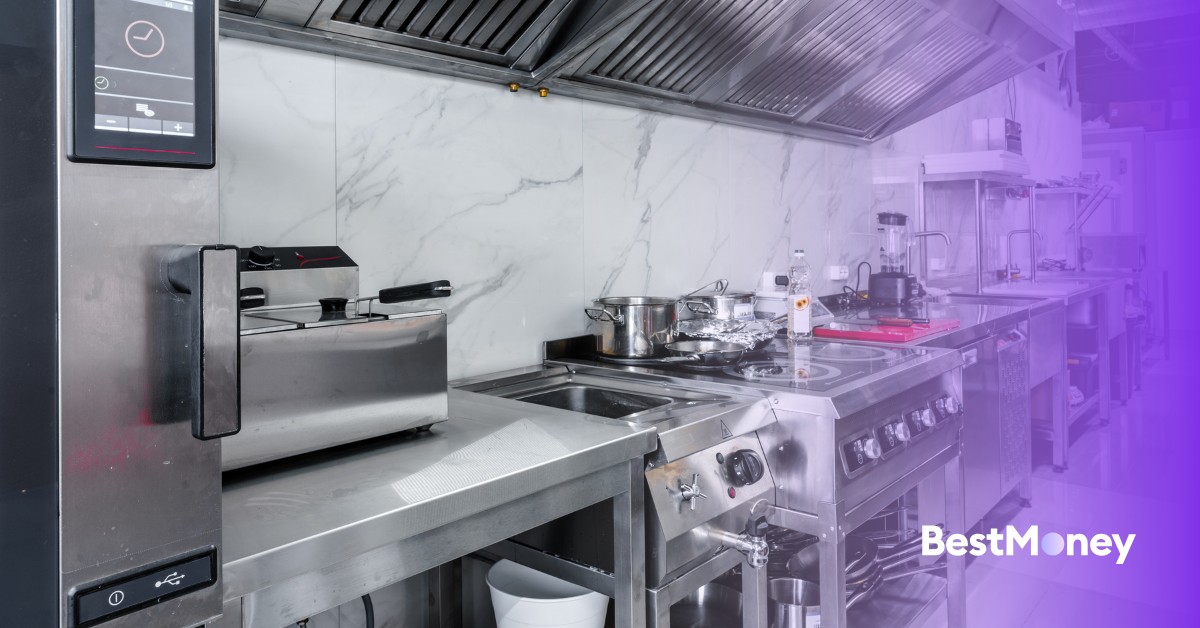
- Hospitality and food service equipment like ovens, refrigerators, point of sale (POS) systems, etc.
- Agricultural machinery, e.g., tractors, harvesters, and irrigation gear.
- Medical and dental equipment like X-ray machines, dental chairs, and diagnostic tools.
Basically, if the equipment is core to business operations and it produces value, then there’s likely a financing option available.
Types of business equipment financing
So that you can better weigh your options, let’s discuss some common types of business equipment financing.
1. Secured and unsecured equipment loans
An equipment loan is perhaps the most straightforward. The lender gives you a lump sum to buy the asset, then you pay it off over a fixed term with a structured repayment plan.
Secured loans tie the financing to the asset being bought. The equipment serves as collateral thereby reducing the lender’s risk. Because of that lower risk, secured loans typically offer more favourable interest rates.
Unsecured loans don’t require equipment or other collateral. These are harder to secure and generally carry higher interest rates because the lender faces greater risk.
2. Equipment leasing
Leasing is particularly attractive if you want flexibility or don’t necessarily need to own the equipment forever. Operating leases let you use the equipment for a set period and then return it. These are treated like rentals since you don’t own the asset, but you benefit from using it.
Capital leases function more like loans, payments may cover most of the equipment’s value, and there may be an option to buy the equipment at the end of the term, often for a symbolic amount.
Leasing also offers financial benefits; companies can frequently match lease payments to their cash flow cycles, which can be a significant advantage.
3. Vendor financing programs
In most industries, manufacturers or dealers provide vendor financing to make buying easier for customers. These programs can include promotional interest rates, zero-down options, deferred payments, or even bundled maintenance services.
For example, a heavy-duty equipment supplier might partner with a financial institution to offer favourable lease terms to buyers or to finance costs such as shipping, installation, and training for a period of time.
4. Line of credit for equipment
Some businesses leverage a line of credit to finance equipment purchases, particularly for more minor or routine purchases. Rather than tying up money in a long-term loan, they draw on the credit line as needed.
However, a line of credit often has a variable interest rate. It is less structured than a loan or lease, so it’s not always the best solution for significant assets or long-term machinery financing.
What are the benefits of business equipment financing?
One of the most mouth-watering benefits of equipment financing is that it allows businesses to preserve liquidity.
Instead of paying a large lump sum upfront, which could deplete cash reserves, you pay over time. This leaves more capital available for operations, hiring, marketing, and unexpected costs.
Another thing to note is that business equipment financing enables business owners to access updated or high-performance equipment. In terms of competition, especially in industries like tech or manufacturing, having the latest equipment can tilt the scales in your favour.
Financing enables businesses to acquire these modern, efficient machinery without raising large amounts of capital. For leased equipment, the ability to upgrade at lease end is especially valuable.
In Canada, both loans and leases may offer tax benefits. For example, lease payments may be deductible as business expenses.
For owned equipment, businesses may be able to claim capital cost allowance (CCA), which allows depreciation to be used as a tax deduction. If you’re going down this route, you should consult with a tax professional for more specific advice.
Additionally, many lenders understand that business cash flow isn’t uniform. Some finance providers offer creative repayment terms, such as seasonal schedules, step-up payments, or terms that align with your revenue cycles. This helps borrowers adjust financing to real business realities.
What are the requirements for a business equipment financing application?
As with all loan or funding applications, documentation is always required. Some standard documents used include:
- Financial statements, e.g., balance sheet, income statement, etc.
- 6 months of most recent bank statements
- GST/HST filings
- Business identification and incorporation documents
- A quote or invoice for the equipment
In some cases, especially for larger or riskier loans, personal guarantees or additional security may also be requested.
Lenders usually evaluate business credit history, personal credit profile, annual revenue and cash flow, debt-service coverage ratio (DSCR), and the quality, age, and condition of the equipment being financed.
Because the equipment itself often serves as collateral, many lenders are more flexible with credit than with unsecured business loans.
Another thing to note is that lenders vary in risk tolerance, approval speed, and costs. For instance, the BDC provides flexible terms and more risk sharing. Your choice should depend on how quickly you need funds, how long you want to repay, and whether you prioritize rate, flexibility, or speed.
Canada’s small businesses represent the backbone of the economy. In fact, 97.8% of Canadian firms have fewer than 100 employees, according to ISED-ISDE’s small business statistics.
These SMEs often need to modernize their operations to remain competitive and they do this by investing in machinery, updating fleets, or upgrading technology.
Also, the Biannual Survey of Suppliers of Business Financing shows that credit disbursements to businesses climbed in the first half of 2024, especially in manufacturing, construction, and transportation sectors.
These are the same industries that rely heavily on equipment financing, signalling strong demand. These stats boldly highlight how and why equipment financing matters.
Key takeaways
Let’s observe this real life success story. A Saskatchewan farm used machinery financing to acquire a modern combine harvester.
Rather than draining savings, they secured a loan with favourable terms, turning a once daunting capital cost into manageable monthly payments. The new combine improved yield and efficiency, supporting long-term growth. That’s the power of equipment financing.
Whether you choose a commercial equipment loan, machinery financing, or equipment leasing for your business, the proper financing structure will help you preserve your working capital, invest in modern assets, and maintain flexibility.
If you’re a business owner planning to expand, upgrade, or renew your equipment without having to drain your cash reserves, equipment financing would be one of the most innovative tools you can take advantage of.
With careful planning, the right lender, and a well structured deal, you can keep your business competitive and your cash flow healthy.
FAQs about equipment financing
Yes, many startups can qualify, especially if the equipment itself is usable as collateral. Lenders may consider business potential, cash flow forecasts, and ownership experience. Government linked lenders like BDC may be more flexible in such cases.
Lease payments may count as deductible business expenses. If you own the equipment, you may claim depreciation through Canada’s Capital Cost Allowance (CCA). That said, tax treatment depends on your structure, so consult a professional.
Generally, terms range from 3 to 7 years, though some lenders, particularly development or government related lenders may offer longer terms up to 12 years.
Of course. Lenders and financing programs support the financing of used machinery, especially in sectors such as construction, agriculture, and transportation. The key is that the equipment must have enough value and a clear resale market.