






On this page
Best credit card offers for CanadiansHow credit card offers workWelcome bonuses and minimum spending requirementsRewards structures: points, miles, and cash backPromotional interest ratesAnnual fees vs fee-free offersCredit card offers by category.Travel card offersCash back card offersNo-fee or introductory offersPremium or high-reward offersHow to compare credit card offersCompare the welcome bonus value vs the minimum spendWeigh annual fees against rewards and perksConsider interest rates and other feesLook at insurance and travel benefitsWhen a credit card offer is worth itFrequent travellers vs everyday spendersHow welcome bonuses can offset feesAvoiding debt and paying balances in full each monthTips to maximise credit card offersMeet minimum spend requirements strategically.Use cards where you earn the highest reward.sTrack offer expiry dates and conditionsCommon credit card offer mistakes to avoidChasing bonuses without checking feesPaying high interest by carrying a balanceIgnoring eligibility requirementsConclusion — Finding the best credit cards for you
On this page
Add one more
Clear
Compare
Expert verified

Updated September 2026

Canada's Best
Credit Cards

Be prepared for big purchases, or surprise bills. Compare top credit cards to find the lowest rates to help you spend more.

Avatar photo
Written By BestMoney
Avatar photo
BestMoney
Editor, Writer
Expertise
Personal Loans
Business Loans
Home Insurance

Your money deserves the best. BestMoney shows you Canada’s top loans, insurance, and credit cards...

|
Avatar photo
Reviewed By Edwin Gan
Avatar photo
BestMoney
Editor, Writer

Get cash back, annual fee waivers, promotional reward rates and more.

Get personalized credit card offers.

Approved in as little as 30 minutes

Qualify for up to a $15,000 limit in just a few clicks

Unlock access to exclusive rates, low fees, and cash back

Product Comparison
Get Started
Read Review
Get Started
Read Review
Loan Amount $2 - $15k $2 - $15k
APR Range 0% - 46.96% 0% - 46.96%
Serviced Area BC, AB, MB, SK BC, AB, MB, SK
Loan Term 0.5-5 Years 0.5-5 Years
Turnaround Time 24-48 Hours 24-48 Hours
Min. Credit Score 400 400
Fees None None
More Filters
Sort

BestMoney Score

Partner: A-Z

Partner: Z-A

Card Type

Any

Any

Balance Transfer

Business

Low Interest

No Fee

Rewards

Secured

Student

US Dollar

Reward Type

Any

Any

Points

Travel

Cash Back

Network

Any

Any

American Express

Mastercard

Visa

Province

ON

Any

AB

BC

MB

NB

NL

NS

NT

NU

ON

PE

QC

SK

YT

Cancel
Apply
More Filters

Card Type

Any

Any

Balance Transfer

Business

Low Interest

No Fee

Rewards

Secured

Student

US Dollar

Reward Type

Any

Any

Points

Travel

Cash Back

Network

Any

Any

American Express

Mastercard

Visa

Cancel
Apply
BestMoney Score

BestMoney Score

Partner: A-Z

Partner: Z-A

Cost
9.8
Experience
9.9
Flexibility
9.9
Support
9.9

9.9

BestMoney Score

Welcome Bonus

$25

Annual Fee

$0*

Min. Annual Income

$60k

Cash Back

2%

Continue
See Details
Expert Take:

It’s a strong flat‑rate cashback card with perks like no FX fees and an annual fee waiver for qualifying clients, plus a modest sign‑up bonus.

Qualification requirements

  • Passport + work/study permit for at least 12 months
  • Be the age of majority in your province
  • Individual income ≥ $60,000 or household ≥ $100,000

Cashback categories

  • 2% on everything

Interest & fees

  • Annual fee: $240, waived with a $100k chequing balance
  • Annual interest rate on purchases: 20.99% - 25.99%
  • Annual interest rate on cash advance: 22.99% - 27.99%
  • Foreign currency conversion fee: 0%
  • Replacement card fee: $0

Pros

There’s often a $25 sign‑up bonus when you open and fund your first Wealthsimple account and get the credit card (via promotions/referral offers).
You earn unlimited 2% cash back on all eligible purchases with no complicated categories or caps.
The card charges zero foreign exchange (FX) fees on purchases in other currencies, helping you save when you travel or shop abroad.

Cons

The annual fee isn’t automatically free for everyone — it’s waived only if you meet Wealthsimple’s eligibility criteria (e.g., qualifying direct deposits or asset thresholds).
Approval is still selective and requires strong credit/income history, so not all applicants will get accepted.
Cost
9.8
Experience
9.8
Flexibility
9.9
Support
9.8

9.8

BestMoney Score

Welcome Bonus

$100

Annual Fee

$0

Min. Annual Income

$50k

Cash Back

2%

Continue
See Details
Expert Take:

This card is a solid no‑annual‑fee cash back choice with a generous new‑card bonus and flexible 2% earning categories.

Qualification requirements

  • Passport + work/study permit for at least 12 months
  • Be the age of majority in your province
  • $50,000 gross annual income, $80,000 gross household income

Cashback categories

  • 2% on 3 categories
  • 0.5% on everything else

Interest & fees

  • Annual fee: $0
  • Annual interest rate on purchases: 20.99% - 25.95%
  • Annual interest rate on cash advance: 22.95% - 27.95%
  • Annual interest rate on balance transfers: 22.95% - 27.95%
  • Foreign currency conversion fee: 2.5%

Pros

New cardholders can currently earn a $100 bonus by spending $1,500 in purchases in the first 3 months of approval.
You earn unlimited 2% cash back in up to three customizable categories and 0.5% back on everything else with no annual fee.
The card includes built‑in travel and purchase benefits such as mobile device insurance, rental car coverage, and FlexiRoam global data perks.

Cons

The income/asset eligibility requirements are relatively high compared with some basic cashback cards, which can make qualification harder for newer credit profiles.
Cost
9.8
Experience
9.8
Flexibility
9.8
Support
9.8

9.8

BestMoney Score

Welcome Bonus

10% cash back

Annual Fee

$0

Min. Annual Income

$50k

Cash Back

2%

Continue
See Details
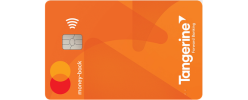
Expert Take:

This card is a strong no‑annual‑fee cashback choice with a generous new‑card bonus and flexible 2% categories.

Qualification requirements

  • Passport + work/study permit for at least 12 months
  • Be the age of majority in your province
  • $50,000 gross annual income, $80,000 gross household income

Cashback categories

  • 2% on 3 categories
  • 0.5% on everything else

Interest & fees

  • Annual fee: $0
  • Annual interest rate on purchases: 20.95% - 25.95%
  • Annual interest rate on cash advance: 22.95% - 27.95%
  • Foreign currency conversion fee: 2.5%

Pros

New cardholders can earn a bonus 10% cash back (up to $100) for the first 2 months on eligible purchases above regular rates.
You earn unlimited 2% cash back in up to three customizable categories when deposited into a Tangerine Savings account and 0.5% on all other purchases.
There is no annual fee, making it a cost‑efficient rewards card that pays cash back monthly rather than annually.

Cons

The foreign currency conversion fee (~2.5%) remains, so cash back on foreign‑currency spending may be less valuable.
The regular 0.5% cash back on non‑selected categories is lower than some other no‑fee cards, so overall rewards depend on how well your spending fits the chosen categories.
Cost
9.8
Experience
9.8
Flexibility
9.8
Support
9.8

9.8

BestMoney Score

Welcome Bonus

20% cash back

Annual Fee

$0

Min. Annual Income

$15k

Cash Back

4%

Continue
See Details
Expert Take:

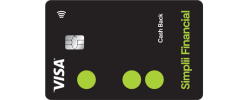
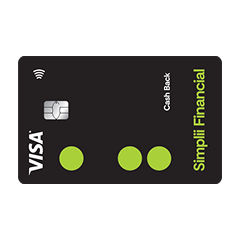
The Simplii Financial Cash Back Visa is a strong no‑annual‑fee rewards card with high cash‑back rates and a solid welcome bonus, ideal for everyday spending.

Qualification requirements

  • Passport + work/study permit for at least 12 months
  • Be the age of majority in your province
  • Minimum annual household income of $15,000

Cashback categories

  • 4% at restaurants
  • 1.5% on gas & groceries
  • 0.5% on everything else

Interest & fees

  • Annual fee: $0
  • Annual interest rate on purchases: 21.99% - 24.99%
  • Annual interest rate on cash advance: 22.99% - 27.99%
  • Annual interest rate on balance transfer: 22.99% - 27.99%
  • Foreign currency conversion fee: 2.5%

Pros

This card has no annual fee, so you keep rewards without ongoing costs.
You can earn up to 4% cash back on eligible restaurants, bars, and coffee shops, plus solid rates on gas, groceries, drugstore purchases and other eligible spend.
The card often includes a welcome bonus of up to 20% cash back for your first 3 months (up to a set spend limit).

Cons

Foreign currency purchases incur a foreign transaction fee (~2.5%), reducing net cash‑back value when you shop or travel abroad.
Some benefits like rental car insurance or more extensive travel perks are not included, making it less premium than some competitors.
Cost
9.7
Experience
9.9
Flexibility
9.9
Support
9.7

9.8

BestMoney Score

Welcome Bonus

$100

Annual Fee

$0

Min. Annual Income

$80k

Cash Back

5%

Continue
See Details
Expert Take:

Limited-time offer: Get an exclusive $100 with the Neo World Elite Mastercard when you spend $1,500 in the first 3 months. There’s no annual fee for the first year and up to 5% cash back.

Qualification requirements

  • Passport + work/study permit for at least 12 months
  • Be the age of majority in your province
  • Personal income of $80,000 or a household annual income of $150,000

Cashback categories

  • 5% on groceries
  • 4% on recurring expenses
  • 3% on gas
  • 1% on everything else

Interest & fees

  • Annual fee: $149 (waived for 1st year)
  • Annual interest rate on purchases: 19.99% - 29.99%
  • Foreign currency conversion fee: 2.5%

Pros

You can earn high cashback rates on everyday categories like 5% on groceries, 3% on gas, and 4% on recurring payments.
The card includes World Elite Mastercard travel and purchase protections, such as insurance and premium benefits.
You can use your card instantly with a virtual version while waiting for the physical card, and manage everything easily in the Neo app.

Cons

There’s a $149 annual fee, which can outweigh rewards if you don’t maximize spending in the top categories.
The income eligibility is high, making this card harder to qualify for than many no‑fee or mid‑tier cards.
Cost
9.8
Experience
9.7
Flexibility
9.8
Support
9.7

9.8

BestMoney Score

Welcome Bonus

$25

Annual Fee

$0

Min. Annual Income

None

Cash Back

1%

Continue
See Details
Expert Take:

The Neo Mastercard is a flexible, no‑annual‑fee cash‑back credit card with an easy digital experience and potential sign‑up bonus, but it works best for users who prioritize simple everyday rewards over premium perks.

Qualification requirements

  • Passport + work/study permit for at least 12 months
  • Be the age of majority in your province

Cashback categories

  • 1% on gas and grocery

Interest & fees

  • Annual fee: $0
  • Annual interest rate on purchases: 19.99% - 24.99%
  • Annual interest rate on cash advance: 22.99% - 25.99%
  • Foreign currency conversion fee: 3%

Pros

There’s a sign‑up bonus of $25 credited to your account after approval and first use.
The card generally offers cash back on everyday spend (e.g., 1% on gas and groceries and more at partner retailers) with no annual fee on the base plan.
You can get an instant virtual card upon approval and manage everything easily in a modern mobile app.

Cons

Reward rates and partner cash‑back bonuses can be confusing and vary by membership plan, with stronger rewards tied to higher‑tier paid plans.
Benefits such as comprehensive insurance or travel perks are limited or absent compared with many other rewards cards.
How BestMoney Works
How BestMoney Works
01
Discover card offers
Explore Canada’s top credit card offers in one place and easily compare their fees, features, and reward types.
02
Unlock special rewards
Take advantage of exclusive offers like cash back, waived annual fees, or higher rewards rates when you sign up.
03
Spend with confidence
Choose the cards that fit your spending style and access rewards that put money back in your pocket.

On this page

  • Best credit card offers for Canadians
  • How credit card offers work
  • Welcome bonuses and minimum spending requirements
  • Rewards structures: points, miles, and cash back
  • Promotional interest rates
  • Annual fees vs fee-free offers
  • Credit card offers by category.
  • Travel card offers
  • Cash back card offers
  • No-fee or introductory offers
  • Premium or high-reward offers
  • How to compare credit card offers
  • Compare the welcome bonus value vs the minimum spend
  • Weigh annual fees against rewards and perks
  • Consider interest rates and other fees
  • Look at insurance and travel benefits
  • When a credit card offer is worth it
  • Frequent travellers vs everyday spenders
  • How welcome bonuses can offset fees
  • Avoiding debt and paying balances in full each month
  • Tips to maximise credit card offers
  • Meet minimum spend requirements strategically.
  • Use cards where you earn the highest reward.s
  • Track offer expiry dates and conditions
  • Common credit card offer mistakes to avoid
  • Chasing bonuses without checking fees
  • Paying high interest by carrying a balance
  • Ignoring eligibility requirements
  • Conclusion — Finding the best credit cards for you

Best credit card offers for Canadians

Most Canadians get their first credit card for one simple reason: convenience. It’s easier to shop online, pay bills, book travel, and build credit when you have a card in your wallet.

But after you’ve had one for a while, you start noticing something else.

Credit card companies in Canada compete just as aggressively as banks do. And the easiest way for them to win your business is to offer an incentive.

That’s why the best credit card offers can be surprisingly valuable. Some promotions offer large point bonuses that can be redeemed for flights, hotel stays, or statement credits.

Others include high cash back, first-year annual-fee waivers, airport lounge access, travel insurance, and promotional interest rates, such as balance-transfer deals.

However, the “best” credit card offer is not the same for everyone.

A travel card with a huge points bonus might be perfect for someone who flies often. But it may be a poor fit for someone who rarely travels and wants simple cash back.

A premium card might offer excellent benefits, but the annual fee could cancel out the rewards if you don’t use the perks.

This guide breaks down how credit card sign-up bonuses work in Canada, what types of credit card welcome offers are common, and how to compare promotions properly so you can pick a card that fits your spending habits, your lifestyle, and your financial goals.
How credit card offers work

Credit card promotions can seem exciting, but they typically follow a predictable pattern.

In Canada, most offers fall into four main categories:

  • Welcome bonuses (points, miles, or cash)
  • Ongoing rewards programs
  • Promotional interest rates (like balance transfers)
  • Perks and benefits (insurance, lounge access, credits)

Understanding how each one works will help you avoid common traps and choose the right offer.

Welcome bonuses and minimum spending requirements

A welcome bonus is the “headline” part of most best credit card offers.

It usually comes as:

  • Reward points (travel points or flexible points)
  • Airline miles (through partner programs)
  • Cash back (as a statement credit or deposit)
  • Gift cards (less common)

Why banks offer welcome bonuses

Welcome bonuses exist because banks want you to:

  • Apply for the card
  • Use it as your primary spending card.
  • Keep it long-term
  • Possibly buy other financial products later.

In other words, the bonus is the hook.

How minimum spending works in Canada

Most credit card welcome offers require you to spend a certain amount within a set period.

For example:

  • Spend $1,000 in 3 months.
  • Spend $3,000 in 6 months.
  • Spend $10,000 in 3 months (premium cards)

This is known as a minimum spend requirement.

If you do not meet it, you may receive:

  • A reduced bonus
  • No bonus at all

Common bonus structures

Many Canadian credit cards use multi-part bonuses, such as:

  • Bonus points after first purchase
  • Bonus points after meeting minimum spend
  • Bonus points after keeping the card for 12 months
  • Bonus points each month you meet a spending target.

This structure encourages long-term card use.

Rewards structures: points, miles, and cash back

After the welcome bonus, the card’s long-term value comes from its rewards.

Canadian credit cards generally reward spending in three ways:

1) Points programs

Points-based cards usually offer:

  • 1 point per $1 on general spending
  • Higher multipliers in categories like groceries, dining, travel, and gas

Points may be redeemed for:

  • Travel bookings
  • Statement credits
  • Gift cards
  • Merchandise
  • Transfers to airline programs (some cards)

Points cards can be extremely valuable if you use them strategically.

2) Miles programs

Miles cards are typically tied to travel.

You earn miles and redeem them for:

  • Flights
  • Travel packages
  • Travel statement credits

Miles programs can be valuable, but they often come with restrictions.

3) Cash back

Cash back cards are the simplest.

You earn a percentage back on spending, such as:

  • 1% on general purchases
  • 2% on groceries
  • 3% on gas
  • 4% on recurring bills

Cash back is straightforward and works well for most Canadians.

Promotional interest rates

Not every credit card offer is about rewards. Some of the best credit card offers in Canada focus on interest savings.

The most common promo interest deals include:

Balance transfer offers

A balance transfer promotion lets you move existing credit card debt from another card.

The new card offers a low promotional interest rate for a limited time, such as:

  • 0% for 6 months
  • 1.99% for 9 months
  • 3.99% for 12 months

However, balance transfers often include:

  • A transfer fee (commonly 1% to 3%)
  • Strict rules on payments
  • Higher interest if you miss a payment

Balance transfers can be useful, but only if you stop adding new debt.

Low purchase rate promotions

Some cards offer a reduced purchase interest rate for a limited time.

These are less common than balance transfers.

Annual fees vs fee-free offers

Credit cards in Canada fall into two major groups:

  • No-fee cards
  • Annual-fee cards

No-fee cards

No-fee cards are popular because:

  • They cost nothing to keep
  • They often still earn rewards.
  • They can help build credit history.

But the rewards are usually smaller.

Annual-fee cards

Annual-fee cards usually offer:

  • Larger welcome bonuses
  • Higher reward-earning rates
  • Better insurance coverage
  • Premium perks like lounge access

The key is ensuring the value you receive exceeds the annual fee. Many Canadian cards also offer a “first-year free” promotion.

That can make an annual-fee card an excellent short-term deal.

Credit card offers by category.

To understand the best credit card offers, it helps to categorise them.

This makes it easier to find the right fit for your goals.

Travel card offers

Travel credit card offers are among the most valuable promotions in Canada.

These cards usually include:

  • Large welcome points bonuses
  • Travel insurance
  • Free checked bag perks (sometimes)
  • Airport lounge access (premium cards)
  • Extra points on travel spending

Which travel cards are best for

Travel card offers are best for Canadians who:

  • Fly at least once per year
  • Want to redeem points for flights or hotels.
  • Spend enough to earn rewards consistently.
  • Can pay balances in full every month

Common travel card bonus terms

Travel cards often require:

  • Higher minimum spend
  • Annual fees
  • A longer qualification period

They can still be worth it, but only if you understand the rules.

Cash back card offers

Cash back offers are the most popular type of credit card offer in Canada. They are easy to understand and easy to use.

Cash back cards often offer:

  • High cash back in bonus categories
  • Welcome bonuses in the form of statement credits
  • No complicated redemption rules

Who the cash back offers are best for

Cash back credit cards are best for Canadians who:

  • Want simple rewards
  • Spend heavily on groceries, gas, and bills.
  • Prefer flexibility over travel point.s
  • Want predictable value

Typical cash back offer types

In Canada, cash back offers often include:

  • A flat cash bonus after meeting a minimum spend
  • A boosted cash back rate for the first 3 months
  • Extra cash back for recurring bills

No-fee or introductory offers

No-fee credit cards can still have strong offers.

The best no-fee cards often include:

  • Small welcome bonuses
  • Decent cash back
  • Good rewards for everyday spending
  • Promotional interest rates

Who no-fee cards are best for

No-fee cards are best for Canadians who:

  • Want a long-term card with no cost
  • Want to build credit.
  • Don’t spend enough to justify the annual fee.s
  • Want a backup credit card.

No-fee cards are also useful as a second card.

You can pair them with a premium card and use each one for different categories.

Premium or high-reward offers

Premium cards often have the most eye-catching promotions.

These offers may include:

  • Huge welcome bonuses
  • Premium travel perks
  • Lounge access
  • Luxury hotel benefits
  • Higher insurance coverage

These cards are often associated with:

  • American Express
  • High-tier Visa Infinite cards
  • World Elite Mastercard products

Which premium offers are best for

Premium credit card offers are best for Canadians who:

  • Travel frequently
  • Spend each month heavily.
  • Can meet large minimum spend requirements
  • Will use perks like lounge access and insurance

The risk of premium cards

The risk is simple: high annual fees. If you don’t use the perks, the card becomes expensive.

How to compare credit card offers

Comparing credit card offers properly is the difference between getting a great deal and getting an expensive card you regret.

Here’s what Canadians should focus on.

Compare the welcome bonus value vs the minimum spend

A welcome bonus is only valuable if you can earn it.

Ask:

  • How much do I need to spend?
  • How long do I have to spend it?
  • Can I meet this requirement naturally?

A smart way to judge minimum spend

A good minimum spending requirement is one you can meet through normal expenses, like:

  • Groceries
  • Gas
  • Phone bills
  • Insurance
  • Streaming services
  • Transportation
  • Household shopping

You should not take on extra spending to earn a bonus.

If you do, you erase the value of the offer.

Weigh annual fees against rewards and perks

Annual fees are not automatically bad.

But you must know what you’re paying for.

Ask:

  • What is the annual fee?
  • Is the first year free?
  • How much value do I realistically get from the rewards?
  • Do I actually use the perks?

A simple example

If a card costs $120 per year but gives you:

  • Strong rewards
  • Travel insurance you’d otherwise pay for
  • A welcome bonus worth $300+

It could be worth it.

But if you don’t use the perks, a no-fee card might be better.

Consider interest rates and other fees

Even if you are focused on rewards, you should still check:

  • Purchase interest rate
  • Cash advance interest rate
  • Balance transfer fees
  • Foreign transaction fees
  • Late payment fees

A key rule for Canadians

The best rewards credit card is only worth it if you pay your balance in full.

If you carry a balance, interest charges will destroy any rewards value.

Look at insurance and travel benefits

Insurance can be one of the most valuable parts of a credit card.

Canadian cards may include:

  • Emergency medical travel insurance
  • Trip cancellation and interruption
  • Flight delay coverage
  • Lost baggage insurance
  • Rental car collision coverage
  • Purchase protection
  • Extended warranty

If you travel, these benefits can be worth hundreds of dollars.

But you must check:

  • Coverage limits
  • Age restrictions
  • Trip duration limits
  • Whether you must charge the trip to the card

When a credit card offer is worth it

Not every offer is worth applying for.

A good offer should match your lifestyle.

Frequent travellers vs everyday spenders

Frequent travellers benefit most from:

  • Travel points
  • Airline perks
  • Lounge access
  • Travel insurance

Everyday spenders benefit most from:

  • High grocery cash back
  • Gas rewards
  • Recurring bill rewards
  • Simple redemption

There is no universal “best” credit card.

There is only the best fit.

How welcome bonuses can offset fees

One reason Canadians value credit card sign-up bonuses is that they can offset annual fees.

For example:

  • A $150 annual-fee card with a $400 bonus remains profitable in year one.

But you should still consider year two.

Ask yourself:

  • Will I keep the card?
  • Will I downgrade later?
  • Will I cancel before renewal?

Avoiding debt and paying balances in full each month

This is the most important point in the entire guide.

Credit card offers are only beneficial if you:

  • Pay the full statement balance
  • Avoid interest charges
  • Avoid late fees

Even one month of interest can wipe out a bonus.

If you often carry a balance, a low-interest card may be a better option than a rewards card.

Tips to maximise credit card offers

If you want to get the most value from the best credit card offers, you need a plan.

Meet minimum spend requirements strategically.

The best way to earn bonuses is by using your card for expenses you already have.

Examples include:

  • Groceries
  • Gas
  • Insurance payments
  • Internet and phone bills
  • Transit and rideshares
  • Household shopping
  • Subscription services

Avoid spending on things you don’t need just to chase a bonus.

Use cards where you earn the highest reward.s

Many Canadians earn more by using different cards for different categories.

For example:

  • One card for groceries and gas
  • Another for travel
  • Another for recurring bills

This strategy can boost rewards without increasing spending.

Track offer expiry dates and conditions

Credit card welcome offers have deadlines.

You should track:

  • The application date
  • The bonus spending deadline
  • The bonus payout timeline
  • Any monthly spending requirements

If you miss a deadline, you may lose the bonus.

Common credit card offer mistakes to avoid

Many Canadians lose money with credit cards, even when the offers look great.

Here are the most common mistakes.

Chasing bonuses without checking fees

Some offers look huge but hide costs, such as:

  • High annual fees
  • Foreign transaction fees
  • High interest rates
  • Balance transfer fees

If you don’t calculate the true cost, the “bonus” may not be worth it.

Paying high interest by carrying a balance

Rewards cards are not designed for people who carry balances. f you pay interest, you lose.

In Canada, credit card interest rates are often around 19.99% or higher. That is far more expensive than any rewards you earn.

Ignoring eligibility requirements

Many Canadian credit card offers are for:

  • New applicants only
  • People who have not held the card in the past 12–24 months

Some banks also limit how often you can earn a welcome bonus.

Always check the eligibility rules.

Conclusion — Finding the best credit cards for you

The best credit card offers in Canada are the ones that match your spending habits, your financial goals, and your lifestyle.

Some Canadians will get the most value from travel rewards and premium perks. Others will benefit more from simple cash back and no-fee cards. And for many people, a strong welcome bonus is the easiest way to get value right away.

The key is to compare offers based on:

  • The true value of the welcome bonus
  • The minimum spend requirement
  • The annual fee and ongoing rewards
  • The insurance and perks you will actually use

If you choose carefully and pay your balance in full, credit card welcome offers can be one of the easiest ways to earn rewards and save money in Canada.

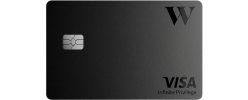
Wealthsimple Infinite Privilege
Welcome Bonus
$25
Annual Fee
$0*
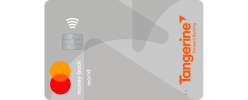
Tangerine Money Back World Mastercard
Welcome Bonus
$100
Annual Fee
$0
Simplii Cash Back Visa Card
Welcome Bonus
20% cash back
Annual Fee
$0
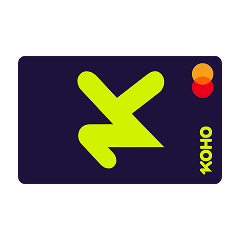
KOHO Card
Welcome Bonus
$40
Annual Fee
$0

FAQs about the best credit cards

What are the best credit card offers in Canada right now?

The best offers typically include generous welcome bonuses, strong ongoing rewards, and valuable perks such as insurance. The right offer depends on whether you want travel points, cash back, or a no-fee card.

How do welcome bonuses work on credit cards?

Welcome bonuses typically require you to spend a certain amount within a set time period. Once you meet the conditions, the bank deposits points, miles, or cash back into your account.

Are credit card sign-up bonuses taxable in Canada?

In most cases, credit card sign-up bonuses are treated as rebates or rewards and are not taxable for personal use. However, tax rules can differ for business use.

What is a good minimum spending requirement for a credit card offer?

A good requirement is one you can meet through normal spending, such as groceries and bills. Many Canadians set a $1,000 to $3,000 target for a 3-month period.

Should I cancel a credit card after I get the bonus?

It depends. Some cards are worth keeping long-term, while others are only worth it for the first-year bonus. Always consider your credit score, annual fee renewal date, and long-term value.

How do I compare credit card offers effectively?

Compare the welcome bonus value, minimum spend, annual fee, reward rates, and benefits like insurance. The best offer is the one that fits your lifestyle and spending patterns.

Get the Best
for your Money

Find the best credit card rewards for your everyday spending. Check out how you can save money when you spend.

Get Started